 beth
beth
Consult your healthcare provider before using CBD products during pregnancy or breastfeeding, as major medical organizations including Health Canada, the FDA, and the American College of Obstetricians and Gynecologists currently advise against their use due to insufficient safety data.
Stop all CBD use immediately if you’re pregnant, trying to conceive, or nursing, since cannabinoids cross the placental barrier and pass into breast milk, potentially affecting your baby’s developing brain and organs.
Review product labels carefully if you’ve already used CBD, understanding that the unregulated nature of many CBD products means they may contain higher THC levels or contaminants than advertised, and discuss any exposure with your prenatal care team.
Explore evidence-based alternatives for common concerns that lead mothers to consider CBD, such as doctor-approved remedies for nausea, anxiety, pain, or sleep difficulties that won’t put your baby at risk.
The rising popularity of CBD has left many pregnant and breastfeeding mothers wondering whether these products are safe during this critical time. While CBD is often marketed as natural and therapeutic, the reality is more complex when you’re growing or nourishing a baby. Current research on CBD’s effects during pregnancy remains extremely limited, and what we do know raises genuine concerns about potential developmental impacts. This article breaks down the official medical guidance, examines the available science, and provides safer alternatives so you can make informed decisions that protect both your wellbeing and your baby’s healthy development.
Why CBD During Pregnancy Raises Red Flags
How CBD Moves Through Your Body
When you take CBD—whether through oils, edibles, or topical products—it enters your bloodstream and travels throughout your body. Your body absorbs CBD primarily through your digestive system or the thin tissues under your tongue, depending on how you use it.
Here’s what matters most during pregnancy: CBD doesn’t stay confined to your system. Research shows that CBD can cross the placental barrier, meaning it reaches your developing baby. The placenta, which normally filters many substances, cannot block CBD molecules from passing through.
Once CBD enters your bloodstream, it also accumulates in fat tissue throughout your body. Because CBD is fat-soluble (it dissolves in fat rather than water), it can remain stored in your body for extended periods. During breastfeeding, these stored compounds can transfer into breast milk, which has a high fat content.
Scientists are still working to understand exactly how much CBD transfers to babies and how long it stays in their developing systems. What we do know is that your baby’s developing brain and organs are particularly vulnerable to substances that affect the endocannabinoid system—the network of receptors that CBD interacts with throughout the body.
What We Don’t Know (And Why That Matters)
Here’s the reality: we simply don’t have enough research on CBD use during pregnancy and breastfeeding in humans. While some animal studies suggest potential concerns, we can’t directly apply those findings to human pregnancies. This gap in knowledge isn’t just an academic issue—it has real implications for your health decisions.
Most studies examining CBD and pregnancy have been conducted on mice or rats, often using doses much higher than what people typically consume. These studies have shown possible effects on fetal development, but animal biology differs significantly from human biology, especially during pregnancy.
The few human studies available often can’t isolate CBD from other substances, making it difficult to understand CBD’s specific effects. Research facilities also face ethical limitations—scientists understandably can’t give pregnant volunteers an unstudied substance to see what happens.
This lack of data creates a significant challenge: without proper research, medical professionals can’t identify safe dosage levels, understand potential long-term effects on your baby’s development, or determine which trimester might pose the greatest risk. The placenta and breast milk both transfer substances to your baby, but we don’t fully understand how much CBD crosses these barriers or what happens once it reaches your developing child.
When evidence is limited, medical guidelines follow the precautionary principle—if we don’t know something is safe, we should assume it carries risk. This approach protects you and your baby while researchers work to fill these critical knowledge gaps.
What Health Authorities Actually Say

FDA’s Warning to Pregnant Women
The U.S. Food and Drug Administration has issued a clear warning about CBD use during pregnancy and breastfeeding. The agency strongly advises against consuming any cannabis-related products, including CBD, during these critical periods.
The FDA’s position stems from several serious concerns. First, research shows that CBD can cross the placental barrier, meaning it reaches your developing baby. Similarly, CBD appears in breast milk, potentially exposing nursing infants. The agency emphasizes that we simply don’t have enough research to understand how CBD affects fetal development or infant health.
The FDA specifically warns that CBD products may contain contaminants like pesticides, heavy metals, or bacteria that pose additional risks. Many products also contain higher THC levels than advertised, which compounds safety concerns.
Their reasoning is straightforward: your baby’s brain and organs are developing rapidly during pregnancy and early infancy. Even substances that seem harmless to adults could interfere with this delicate process. The FDA notes that animal studies have shown potential reproductive harm and developmental issues, though human studies remain limited.
This precautionary stance reflects the medical community’s standard approach: when safety data is insufficient, protecting vulnerable populations takes priority over potential benefits.
Medical Organization Guidelines
Major medical organizations have taken clear positions on CBD use during pregnancy and breastfeeding, consistently recommending against it. The American College of Obstetricians and Gynecologists (ACOG) advises pregnant and breastfeeding individuals to avoid all cannabis products, including CBD, due to insufficient safety data and potential risks to fetal and infant development. Similarly, the American Academy of Pediatrics strongly discourages cannabis use in any form during pregnancy and lactation, emphasizing concerns about neurodevelopmental effects.
The Food and Drug Administration (FDA) has issued specific warnings stating they strongly advise against CBD use during pregnancy and while breastfeeding. They highlight that CBD can be transferred to developing babies through the placenta and breast milk, potentially causing unknown harm. The Society for Maternal-Fetal Medicine echoes these concerns, noting that cannabis compounds may affect the developing brain.
These organizations emphasize that the lack of controlled research means we cannot determine a safe amount or timing for CBD use. Their recommendations prioritize caution, acknowledging that protecting your baby’s development is paramount when scientific evidence remains limited.
Why Doctors Urge Caution
Healthcare providers consistently advise against CBD use during pregnancy and breastfeeding because the potential risks outweigh any unproven benefits. The core concern isn’t that doctors have found definitive harm, but rather that we simply don’t know enough about how CBD affects developing babies. Without proper safety studies, medical professionals can’t confidently say CBD is safe.
Obstetricians and pediatricians follow a fundamental principle: when evidence is limited, protecting the vulnerable takes priority. Since CBD crosses the placenta and transfers into breast milk, your baby would be exposed to these compounds during critical developmental periods. Given that safer, proven alternatives exist for managing common pregnancy discomforts like nausea, anxiety, and pain, most doctors see no compelling reason to experiment with CBD. Your healthcare provider’s caution reflects their commitment to your baby’s wellbeing when scientific understanding remains incomplete.
The Research We Have (And What It Shows)
Animal Studies and Their Limitations
Most of what we know about CBD and pregnancy comes from animal studies, which provide important clues but have significant limitations. Research in rats and mice has shown that high doses of CBD exposure during pregnancy can affect fetal brain development, birth weight, and reproductive health in offspring. Some studies found changes in how offspring’s brains developed, particularly in areas related to learning and memory.
However, these findings come with important caveats. Animals process CBD differently than humans do, and the doses used in research are often much higher than what people typically consume. The timing of exposure, the specific CBD formulation, and individual differences all play crucial roles that aren’t fully captured in animal models.
Additionally, animal studies can’t account for factors like varying product quality, combined substance use, or the complex social and health circumstances that affect human pregnancies. While these studies raise valid concerns about potential risks, they can’t definitively tell us how CBD affects human pregnancy outcomes. This uncertainty is precisely why medical experts advise caution until more human-specific research becomes available.
Human Data: The Missing Pieces
The reality is that high-quality human research on CBD use during pregnancy and breastfeeding simply doesn’t exist yet. This knowledge gap isn’t unique to CBD—researchers face significant ethical challenges when studying pregnant women and infants. It’s nearly impossible to conduct controlled clinical trials that would intentionally expose developing babies to substances with unknown risks.
What we do have comes mostly from observational studies and self-reported data, which have serious limitations. Many studies examining cannabis use during pregnancy don’t distinguish between CBD and THC (the compound that causes a “high”), making it difficult to understand CBD’s specific effects. Additionally, many CBD products contain trace amounts of THC and other cannabinoids, further complicating the picture.
The small amount of data we have primarily comes from animal studies and laboratory research, which show potential concerns about brain development and hormonal systems. Some reports from poison control centers document adverse effects in infants exposed to CBD through breast milk, including sedation and feeding difficulties.
Without rigorous human studies, medical professionals must take a precautionary approach, recommending against CBD use until we have clear evidence of safety for your developing baby.
Potential Risks to Your Baby
Research into CBD use during pregnancy remains limited, but available evidence raises important concerns about potential impacts on your baby. Animal studies suggest that cannabis compounds, including CBD, may cross the placenta and reach your developing baby, potentially affecting brain development during critical growth periods.
Some studies have found associations between prenatal cannabis exposure and lower birth weights, though isolating CBD’s specific effects from other cannabis components proves challenging. Researchers have particular concerns about effects on the developing nervous system, as CBD interacts with the endocannabinoid system—crucial for fetal brain formation and healthy development.
Additional concerns include possible impacts on cognitive function, attention span, and behavioral regulation later in childhood. While we need more research specifically examining CBD alone, the precautionary principle applies: when long-term safety data doesn’t exist, avoiding use during pregnancy and breastfeeding protects your baby from unknown risks.
It’s important to understand that limited evidence doesn’t mean CBD is safe—it means we simply don’t know enough yet. Your baby’s developing brain and body deserve the highest level of protection during these formative months.
CBD and Breastfeeding: A Different Set of Concerns
Does CBD Transfer to Breast Milk?
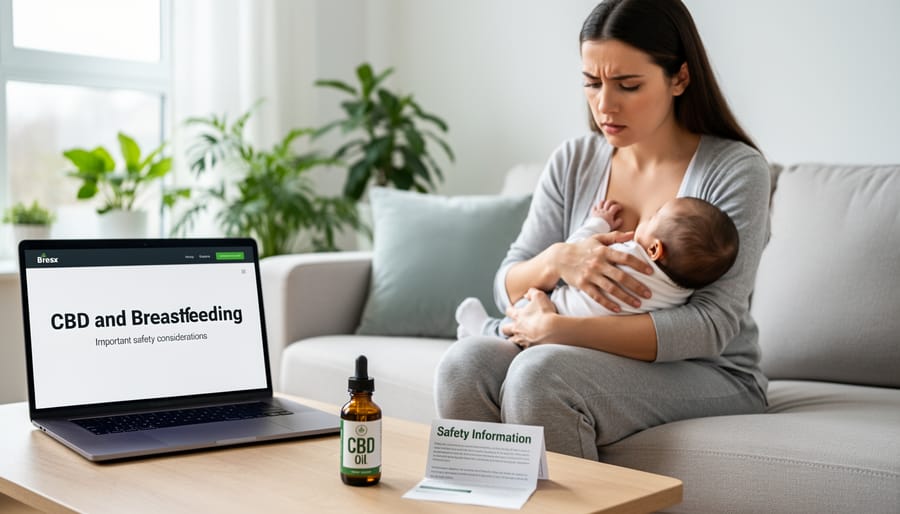
Yes, CBD does transfer into breast milk, and this is an important consideration for nursing mothers. Because CBD is a lipid-soluble compound, meaning it dissolves in fat rather than water, it readily passes into breast milk, which contains significant amounts of fat. This characteristic allows CBD to accumulate in breast milk and potentially reach your baby during feeding.
Research has confirmed the presence of CBD and other cannabis compounds in breast milk samples from mothers who use these products. One study detected THC in breast milk for up to six days after use, and experts believe CBD behaves similarly due to its fat-soluble nature. The concern is that your baby’s developing brain and organs are particularly vulnerable to external substances.
Unfortunately, we don’t yet know how much CBD transfers to breast milk, how long it remains detectable, or what effects even small amounts might have on your nursing infant. The lack of comprehensive research means we cannot determine a safe level of exposure. Given these unknowns and the potential risks to your baby’s development, major health organizations recommend avoiding CBD entirely while breastfeeding. Your baby depends on you for complete nutrition and safety, making caution the wisest approach during this precious time.
Risks to Your Nursing Baby
When you breastfeed, substances in your bloodstream can transfer to your baby through breast milk, and CBD is no exception. The limited research available suggests several potential concerns for nursing infants.
The most significant worry involves your baby’s developing brain. During the first year of life, infant brains undergo rapid, critical growth and development. CBD interacts with the endocannabinoid system, which plays a role in brain development. Researchers haven’t yet determined what effects this interaction might have on developing neural pathways, but the possibility of interference with normal brain development is concerning enough that medical experts recommend caution.
Another consideration involves how CBD might affect your baby’s feeding patterns and behavior. Some mothers have reported changes in their babies’ alertness or sleep patterns, though these observations haven’t been systematically studied. Your baby’s liver is also still developing and may process CBD differently than an adult’s liver would, potentially leading to higher concentrations of the substance in their system.
The concentration of CBD in breast milk isn’t fully understood either. We don’t know how much transfers during nursing or how long it remains in your milk after you’ve used a CBD product. This uncertainty makes it impossible to identify a “safe” amount or timing for CBD use while breastfeeding.
Because your baby’s health and development are at stake, healthcare providers consistently recommend avoiding CBD entirely during the breastfeeding period. If you’re experiencing issues that prompted you to consider CBD, talk with your healthcare provider about evidence-based alternatives that are known to be safe for nursing mothers.
When Moms Consider CBD: Understanding the Why
Pregnancy and breastfeeding bring incredible joy, but they also come with physical and emotional challenges that can feel overwhelming. Many mothers experience difficult symptoms that affect their daily lives, and it’s completely understandable to search for relief.
Some of the most common reasons mothers consider CBD include managing pregnancy-related nausea and morning sickness that can persist throughout the day. The constant discomfort can make it difficult to eat properly or maintain energy levels. Others turn to CBD hoping to address persistent anxiety or worry about their baby’s health, the upcoming birth, or adjusting to parenthood. These concerns are valid and shared by countless parents.
Sleep difficulties are another frequent struggle. Between physical discomfort, frequent bathroom trips, hormonal changes, and racing thoughts, quality rest can feel impossible. Chronic pain is also a reality for many expectant and new mothers, whether from back pain, sciatica, headaches, or postpartum recovery discomfort.
The appeal of CBD often stems from its natural origins and the perception that plant-based options might be gentler than pharmaceutical medications. Many mothers have heard about CBD for anxiety or other conditions and wonder if it could offer them relief without the side effects associated with traditional medications.
If you’re considering CBD or have already used it, there’s no judgment here. Your desire to feel better while protecting your baby shows how much you care. However, understanding what current research tells us about CBD safety during this sensitive time is essential for making informed decisions that support both your wellbeing and your baby’s healthy development. Let’s explore what medical experts and health organizations recommend.
Safer Alternatives for Common Pregnancy Discomforts

Managing Anxiety and Stress
Feeling anxious or stressed during pregnancy is completely normal, and there are several safe, effective ways to find relief without turning to CBD or other unproven supplements. If you’re experiencing pregnancy-related anxiety, talk therapy and cognitive-behavioral therapy (CBT) have strong safety profiles and proven benefits for both pregnancy and postpartum periods.
Mindfulness practices, including guided meditation, prenatal yoga, and deep breathing exercises, can help manage daily stress and anxiety symptoms. Many expecting parents find relief through regular physical activity approved by their healthcare provider, adequate sleep when possible, and building a strong support network.
For moderate to severe anxiety or stress that interferes with daily functioning, medication may be appropriate. Your healthcare provider can discuss pregnancy-safe options that have been studied more extensively than CBD. Certain antidepressants and anti-anxiety medications are considered relatively safe during pregnancy when the benefits outweigh potential risks.
Remember, untreated mental health concerns can also affect pregnancy outcomes, so seeking help is important. Work with your provider to develop a treatment plan tailored to your specific needs and circumstances.
Relieving Nausea and Morning Sickness
Morning sickness affects up to 80% of pregnant women, and finding safe relief is understandably a top priority. While CBD has gained popularity for nausea relief in other contexts, proven alternatives exist that don’t carry the same safety concerns during pregnancy.
First-line treatments include vitamin B6 supplements (10-25mg three times daily), which healthcare providers often recommend as a starting point. Ginger, whether as tea, capsules, or candies, has substantial research supporting its effectiveness for pregnancy nausea. Eating small, frequent meals throughout the day and keeping bland crackers at your bedside can make mornings more manageable.
For severe cases, your healthcare provider may prescribe medications like doxylamine combined with vitamin B6, which has been extensively studied and deemed safe during pregnancy. Acupressure wristbands offer relief for some women without any medication at all.
If you’re experiencing persistent vomiting, losing weight, or unable to keep fluids down, contact your healthcare provider immediately. These symptoms may indicate hyperemesis gravidarum, a severe condition requiring medical treatment. Remember, managing morning sickness effectively means choosing treatments with established safety profiles rather than experimenting with products lacking adequate pregnancy research.
Addressing Pain and Sleep Issues
Pregnancy brings physical discomfort and sleep challenges that understandably prompt many to seek relief. While CBD might seem appealing, safer evidence-based options exist for managing these common concerns.
For pain management, healthcare providers often recommend acetaminophen (Tylenol) as the safest over-the-counter option during pregnancy. Non-medication approaches include prenatal massage, warm baths, pregnancy support pillows, gentle prenatal yoga, and physical therapy for specific musculoskeletal issues. Always consult your healthcare provider before taking any pain reliever, as timing and dosage matter throughout different pregnancy stages.
Sleep difficulties affect most pregnant women, especially during the third trimester. Establishing good sleep hygiene can significantly improve rest quality. Keep your bedroom cool and dark, maintain consistent sleep and wake times, limit screen exposure before bed, and avoid large meals or excessive fluids close to bedtime. Proper sleeping positions and supportive pillows make a substantial difference in comfort. Learning about pregnancy sleep safety helps you find comfortable positions that support healthy circulation for both you and your baby.
If pain or sleep problems persist despite these measures, speak with your healthcare provider about additional safe options tailored to your specific situation.
If You’ve Already Used CBD While Pregnant
If you’ve already used CBD during pregnancy or while breastfeeding, please know that you’re not alone, and there’s no judgment here. Many mothers have used CBD before learning about the potential risks, often seeking relief from common pregnancy discomforts like nausea, anxiety, or pain. What matters most now is moving forward with the right information and support.
First, take a deep breath. Occasional or short-term CBD use doesn’t automatically mean there will be problems with your pregnancy or baby’s development. However, it’s important to be proactive about your next steps.
Schedule an appointment with your healthcare provider as soon as possible to discuss your CBD use. Be honest about when you used it, how much, how often, and what type of product it was. This information helps your doctor provide the most appropriate care and monitoring for you and your baby. Remember, your healthcare team is there to support you, not to criticize your choices.
Your doctor may recommend additional monitoring or specific tests depending on your situation. They can also help you find safer alternatives if you were using CBD to manage specific symptoms. There are many pregnancy-safe options for common discomforts that your provider can suggest.
If you’re currently using CBD, stop immediately and inform your healthcare provider. Discontinuing use reduces any ongoing exposure to your developing baby or nursing infant.
Moving forward, focus on evidence-based approaches to manage any symptoms you’re experiencing. Your healthcare team can work with you to create a safe, effective plan that supports both your wellbeing and your baby’s healthy development. You’re taking the right step by seeking information and prioritizing your family’s health.
Questions to Ask Your Healthcare Provider
Open communication with your healthcare provider is essential when considering any supplement during pregnancy or breastfeeding. Coming prepared with specific questions helps you make informed decisions about your health and your baby’s wellbeing. Here are important questions to discuss at your next appointment:
About CBD specifically, ask: “What are the current medical recommendations regarding CBD use during pregnancy and breastfeeding?” and “Are there any known risks to my baby if I use CBD products?” You might also inquire, “If I’ve already used CBD during my pregnancy, what should we monitor going forward?”
Regarding your symptoms, be direct: “What are the safest ways to manage my nausea, anxiety, pain, or sleep problems during this time?” and “Are there prescription medications that are considered safe for my specific situation?”
For alternative approaches, consider asking: “What non-medication strategies would you recommend for my symptoms?” and “Can you refer me to specialists like a therapist, physical therapist, or nutritionist who can help?”
Don’t forget practical questions: “How can I verify if other supplements or products I’m using are safe?” and “What warning signs should I watch for that would require immediate medical attention?”
Remember, your healthcare provider is your partner in this journey. They would rather answer ten questions than have you make uninformed decisions. If you don’t understand an answer, ask them to explain it differently. Your concerns are valid, and getting clear, personalized guidance is crucial for both you and your baby’s health.
Navigating pregnancy and breastfeeding means making countless decisions about what’s safe for your baby, and the CBD question is just one of many. We understand that CBD products are everywhere, from your local pharmacy to social media ads promising relief from pregnancy discomfort. It’s genuinely difficult to tune out this constant marketing, especially when you’re dealing with morning sickness, anxiety, or postpartum challenges.
However, the evidence is clear: major medical organizations unanimously recommend avoiding CBD during pregnancy and breastfeeding. The potential risks to your developing baby’s brain and long-term health outweigh any possible benefits, particularly when safer alternatives exist for managing your symptoms.
If you’ve already used CBD before knowing you were pregnant, try not to panic. What matters most is what you do moving forward. The same applies if you’re currently considering CBD products. We encourage you to have an honest, judgment-free conversation with your healthcare provider about what you’re experiencing. Whether it’s nausea, pain, anxiety, or sleep problems, your doctor can help you find evidence-based solutions that won’t put your baby at risk.
Remember, prioritizing your baby’s health doesn’t mean ignoring your own wellbeing. You deserve support and effective treatment for whatever challenges you’re facing. By choosing proven safe alternatives and working closely with your healthcare team, you’re making the best possible decisions for both of you during this important time.